


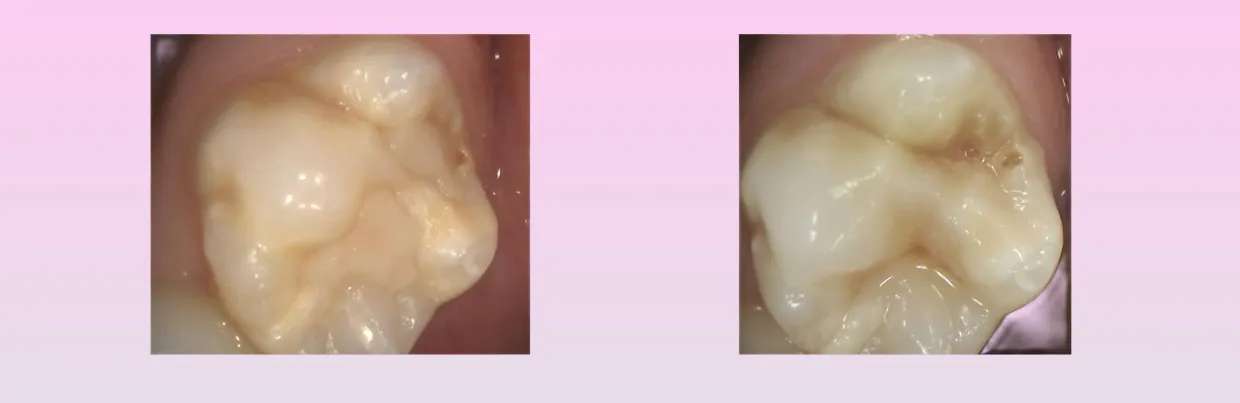
Molar-Incisor-Hypomineralisation (MIH) – Chalky Teeth.
In Australia, in the past 20 years, there has been an increase in the number of children who have MIH.
We do not yet understand the causes of this problem but know that it is usually associated with illness in a pregnant mother or newborn baby.
What is it?
MIH is a weakness in the strength of the dental enamel; hence the term “chalky teeth”. These teeth are often discoloured a yellow-brown colour and start to flake apart as soon as they come through the gum. The flaking off of the weak enamel lets decay get started, and these teeth are often sensitive and painful.
What are the Consequences?
As mentioned, these teeth are often sensitive and painful to eat with. They are also painful to brush and can lead to children avoiding brushing and developing poor oral hygiene and decay.
They can cause sleep disturbance and other behavioural issues because there can be constant dental pain.
The bigger problem is that these teeth lack the strong enamel that modern filling materials require to be able to stick to the teeth. Often , when we place a filling in these teeth, the edge of the tooth next to the filling has broken away within a few weeks. So they are very difficult to keep healthy for a lifetime.
So how should we manage these teeth?
Step 1. Diagnosis.
If the baby second molars or canines show signs of this problem, there it is likely that the first permanent molars will also be effected.
Once the tooth is through when need to assess whether the hypomineralsiation is mild, moderate or severe.
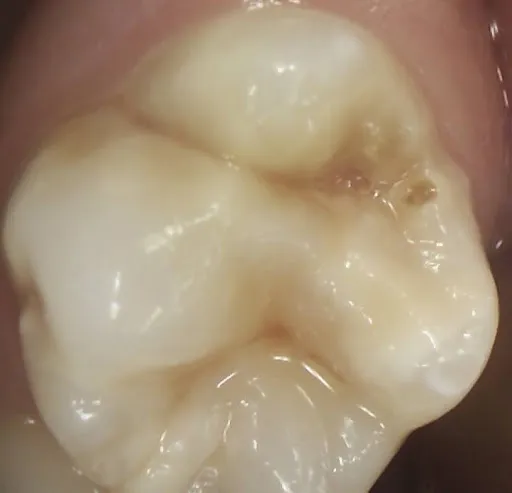
This is a mild case
Step 2. Develop a Treatment Plan.
- Monitor children at the time of eruption of the first permanent molars if hypomineralisation is likely to be present.
- Take photographic records in order to monitor deterioration.
- As these teeth come through, place a protective coating that is high in fluoride to protect the tooth as much as possible while it comes through the gum. (Fissure Seal)
- Determine the severity of the hypomineralisation.
Mild and small area of involvement: fillings and fissure sealants are possible.
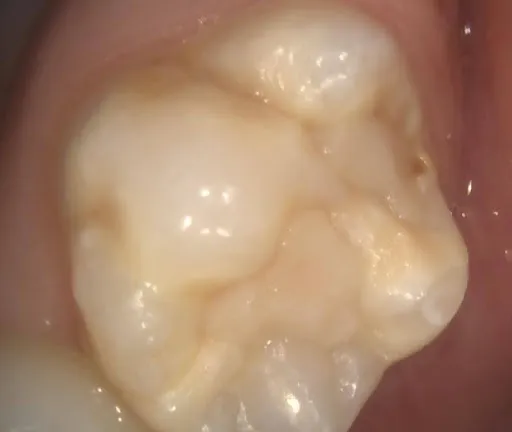
This is the mild case of MIH shown above. It’s been covered by a protective coating/sealant.
Moderate to severe:
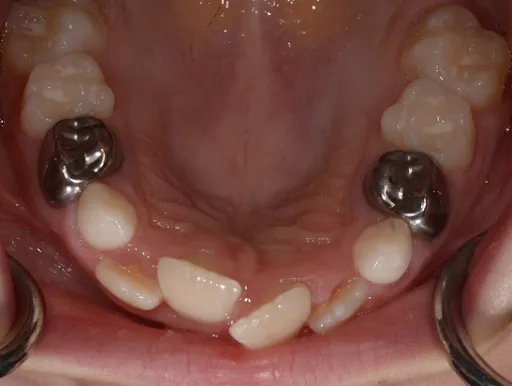
Fillings are not reliable, and a stainless Steel Crown should be placed once the tooth is far enough through the gum. A SS crown is a silver cap that goes over the tooth and is glued into place. It seals the whole of the tooth and covers over all the weak enamel. Unlike crowns placed on adult teeth, we do not remove much of the tooth in order to make room.
Stainless Steel Crown image
A decision needs to be made about whether to keep or extract these teeth
It may be better to remove the bad tooth and leave space for a wisdom tooth to come through. (As these teeth don’t form around the time of birth, they are usually OK).
The timing of extraction of a lower first permanent molar is very important. We need to wait until the second molar (developing under the gum) is at a certain stage before we extract the first molar, otherwise this tooth will not come up normally. Sometimes it is necessary to place a SS crown on a bad tooth because we need time before we extract it. The timing is not really important in the upper jaw. Of course, if we think a tooth is likely to develop an abscess it should be extracted regardless of timing.
If we decide to keep the tooth long term, then the SS crown should last well. The teeth that fall into this category will have had little or no decay present before placing the SS crown. In adulthood we should be able to place a conventional dental crown.
We know from experience that severely affected teeth don’t last. Fillings don’t work. In the past we have placed patch after patch up, hoping that eventually we will be left with sound enamel that we will be able to stick a filling to.
This leads to kids in pain and hating coming to the dentist. It leads to root canals and young adults losing teeth.
So that kids are not saddled with a lifetime of dental problems from these teeth, it is better to have a plan that looks to the future. In mild cases. Fillings and sealants may be OK but if the MIH is moderate to severe then appropriate treatment the SS crowns and/or extraction planning is very important.
As many teeth can be affected, we often refer children to a Paediatric Dentist. They can thoroughly treat all the teeth under a general anaesthetic.
For more information, see the Link to the article in Nature.